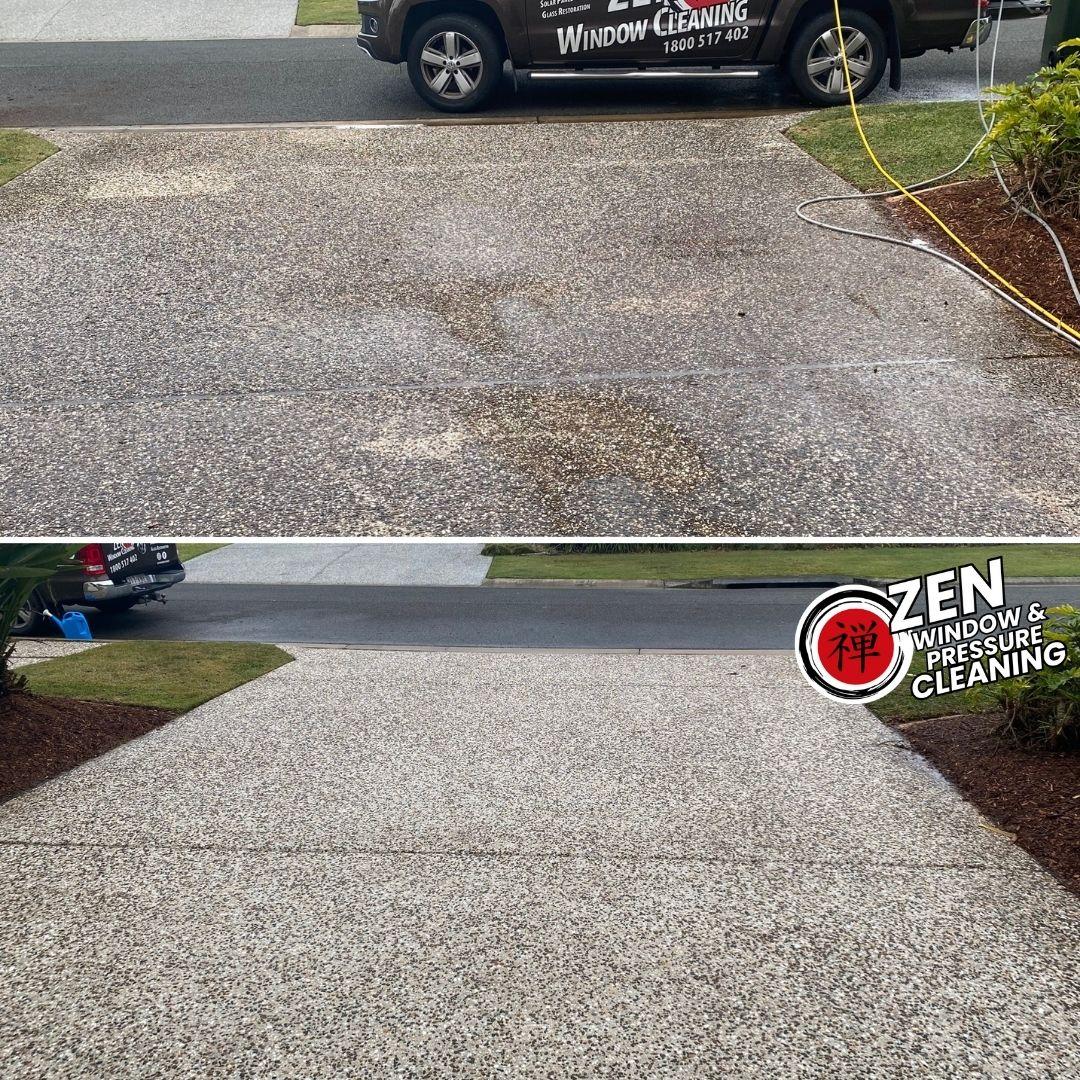
Why Your Driveway Is a Slip Hazard Waiting to Happen
Your driveway looks fine. Bit weathered maybe, but it's concrete - it's supposed to look like that, right?
Then it rains. And suddenly that "bit weathered" surface turns into a skating rink.
If you've ever caught yourself doing that awkward shuffle-walk to avoid stacking it on your own property, you already know what I'm talking about.
The Invisible Slick
Here's what's actually happening on your driveway, paths, and any other concrete or paved surface around your home.
Algae. Mould. Organic buildup. The Gold Coast's humidity and warmth create perfect conditions for this stuff to grow on any outdoor surface. It starts in the shaded spots - under trees, along fence lines, anywhere that stays damp a bit longer than the rest.
When it's dry, you can barely see it. Maybe a slight discolouration. A bit of green tinge if you look closely. Nothing that screams "danger."
But add water - rain, morning dew, even a bit of overspray from the garden hose - and that invisible film becomes genuinely slippery. We're talking slip-and-fall territory. The kind of fall that breaks wrists, cracks hips, and sends people to emergency.
And it's not just driveways. Paths, pool surrounds, patios, front steps - anywhere you walk that's exposed to the elements is building up this layer of organic slime.
It's Not Just About You
Here's where it gets serious.
You might be steady on your feet. You know which bits to avoid when it's wet. You've adapted without even realising it.
But what about your kids running in from the rain? Your elderly parents visiting? The postie walking up to your door? A mate who's had a few beers at your BBQ? 2 out of 4 of those things are ok to laugh at, if you pick the wrong ones, you make people question your morals and upbringing (don't ask me how I know this).
If someone slips and hurts themselves on your property, that's on you. Legally and morally. "I didn't know it was slippery" doesn't really cut it when someone's in a cast.
And the longer you leave it, the worse it gets. That algae doesn't stop growing. It spreads. The texture of your concrete that used to provide grip gets filled in with organic matter until the whole surface is compromised.
I've seen driveways where the owners had no idea how bad it was until we cleaned half of it and they could see the difference. The "clean" half looked like new concrete. The dirty half looked like it had aged twenty years.
The Fix Is Simpler Than You Think
Pressure cleaning a driveway isn't complicated, but there's a right way and a wrong way.
Too much pressure in the wrong spots can etch concrete, damage pavers, and strip sealer. Too little and you're just pushing the grime around. The wrong angle and you're blasting debris everywhere - including into your garden beds, your car, and your neighbour's yard.
We use the right pressure for the surface, the right technique to actually remove the buildup rather than redistribute it, and we'll treat the surface to slow down regrowth.
The difference is immediate. That slippery death-trap goes back to being a normal driveway. The colour comes back. The grip comes back. You stop doing that weird shuffle-walk when it's been raining.
Most driveways only need doing once a year, maybe twice if you're in a particularly shaded or damp spot. It's basic maintenance that makes your property safer and look significantly better.
The Bottom Line
Your driveway is probably more slippery than you realise. You've just gotten used to it.
Don't wait for someone to hurt themselves to find out. Get it cleaned, get it safe, and stop holding your breath every time it rains.
Ready to make your driveway safe again? Get your free online estimate or give us a call on 1800 517 402.
